
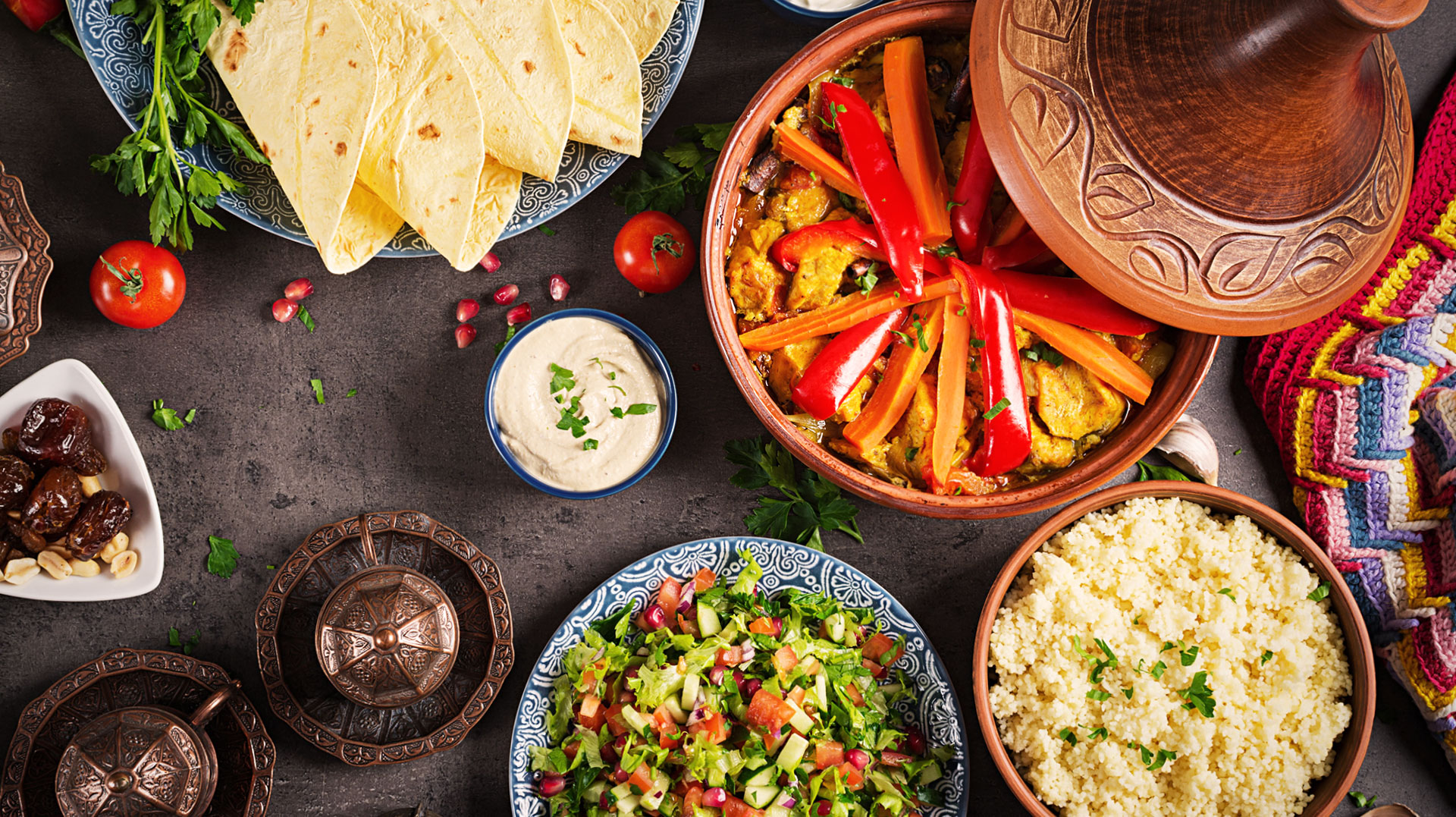
Moroccan cuisine, an experience to be savored
After years in Marrakech, I can say one thing with certainty: if you come to visit the Ochre City without immersing yourself in Moroccan cuisine, you're missing the point.
Here, eating isn't just a necessity. It's an art. A culture. A form of love. Moroccans take the time to do things right, with generosity, patience, and a deep respect for the produce. And above all: they cook wonderfully well.
Whether in a grand palace or a village house at the foot of the Atlas mountains, you can feel that cuisine is part of the country's identity. It's at the heart of everything: celebrations, reunions, hospitality.
Morocco, a land of good products: meat, poultry, fish, vegetables, etc.
What makes Moroccan cuisine so tasty is first and foremost the quality of the produce. Meat is local, often raised in the traditional way. Lamb is meltingly soft and fragrant. Free-range chicken, often prepared with preserved lemon and olives, is a classic that I never tire of. Beef is tasty, used in tanjias, keftas or stews.
But what is often forgotten is that Morocco is also a fishing country.
From the Atlantic coast to Agadir or Dakhla, the fish and seafood are magnificent. In Marrakech, I regularly eat grilled sea bream, baked sea bass and fresh sole, as well as specialties from other parts of the world such as :
- Oualidia oysters (incredibly fine)
- Spiders and lobsters
- Prawns, squid, langoustines, often cooked simply, with a drizzle of olive oil, a few spices, and a lot of respect
Moroccan vegetables are a real feast. Here, agriculture is a serious business. Tomatoes are tasty. Carrots are sweet. Eggplants shine. Fresh herbs grow in profusion. And organic farming is almost instinctive, so close to the land are the producers.
Spices, but no fire: just fragrance
The true signature of Moroccan cuisine is its spices. Unlike other cuisines, here we don't try to spice or burn: we seek balance and fragrance.
The essential spices :
- Cumin: king of the Moroccan table
- Turmeric: for color and softness
- Ginger: fresh or powdered
- Cinnamon: in sweet and savoury dishes
- Sweet paprika
- Black pepper
- And of course, ras el-hanout, a complex blend of 15 to 25 spices, depending on the house.
And then there's saffron, Morocco's true red gold, grown in Taliouine. It's a precious spice, used with subtlety in broths, couscous or festive dishes.
👉 I highly recommend a tour of the medina's spice district - a labyrinth of colors, smells and stories. You can learn a lot, especially from the good herbalists, who are passionate about their craft.
Famous Moroccan dishes and hidden treasures
Couscous
Traditionally served on Fridays. Thin, hand-rolled semolina, seasonal vegetables, chickpeas, and sometimes meat or fish, depending on the region. It's a deep, structured family dish that deserves its time.
Tagines
They come in a thousand forms: chicken-lemon, lamb-prunes, kefta-tomato-egg, fish with vegetables. What do they have in common? Slow cooking, in an earthenware dish that concentrates all the flavours.
The tangia
Typical of Marrakech, tangia is a lamb dish simmered in an earthenware pot, cooked in the ashes of a local oven. With preserved lemon, garlic, cumin and saffron. Rustic, intense, melting.
La Rfissa
A real discovery for many. Chicken in a spicy broth, served on a bed of traditional pancakes (msemmen or trid), with lentils and fenugreek. Nourishing, refined, rare to find in a restaurant, but unforgettable when well done.
Moroccan breakfast, a daily delight
Every morning, it's a simple feast. I never tire of it:
- Buttered msemmen, crispy to perfection
- Baghrir (mille-trous pancakes) topped with honey
- Warm bread with argan or olive oil
- Squeezed orange juice, or pomegranate juice in season
- Local cheeses
- Omelette with khlii, a typical dried meat with a powerful taste
It's a moment of slowness, flavor and pleasure. And a true marker of Moroccan hospitality.
Eating well: a real priority in Morocco
It has to be said: Moroccans know how to cook. It's not a myth. It's a real culture.
Every home has its own recipes, its own tricks of the trade, its own grandmotherly secrets. Women and men alike cook, often with sincere pride. We'll tell you about mother's couscous, neighbor's bread, aunt's pastilla...
Eating well is a sign of love. A sign of respect. And one of Morocco's top priorities. That's why even in the simplest corners of the world, you can find extraordinary dishes.
My favorite Marrakech address
If I had to choose just one restaurant to celebrate Moroccan gastronomy, it would definitely be The Royal Mansour's Great Moroccan Table.
Here, everything is at the height of what Morocco can offer: the décor is sumptuous, without ostentation. The service is a silent choreography. The dishes are works of art, but faithful to tradition. Each bite tells you a story, a territory, a memory.
It's not the cheapest address, of course. But it is the most exceptional. A dinner there is a declaration of love to Moroccan cuisine.
In conclusion: discover a country through its dishes
Morocco can be visited with the eyes, but understood with the mouth. Here, cuisine is alive, local, deeply rooted in people, seasons and rituals.
It's not just about eating well: it's about feeling, taking time, sharing and listening.
For an immersion in Moroccan cuisine, with product discovery, preparation and tasting, we offer you
«from farm to table»a day rich in flavors.
